
Continuous Inkjet Printers (CIJ) for Industrial Coding
What Are Continuous Inkjet Printers?
Continuous inkjet printers (CIJ) are widely used in manufacturing for high-speed product identification and packaging coding. A continuous inkjet printer creates a constant stream of ink droplets that are precisely directed onto products and packaging surfaces.
CIJ printers are commonly used to print batch codes, expiration dates, barcodes, and traceability information on materials such as plastic bottles, metal cans, glass containers, cartons, and flexible packaging.
Because of their versatility and reliability, continuous inkjet printers are one of the most widely used coding technologies in modern production lines.


Why Manufacturers Use Continuous Inkjet Printers
Industrial continuous inkjet printers are designed for fast production environments where reliable coding is essential. CIJ technology enables manufacturers to mark products without direct contact, making it ideal for uneven, curved, or delicate surfaces.
Key advantages include:
- High-speed coding for production lines
- Reliable marking on multiple substrates
- Wide range of specialized inks
- Minimal downtime and maintenance
- Easy integration into packaging systems
Explore Videojet continuous inkjet printers (CIJ) used in 1000+ production lines worldwide for high-speed coding on bottles, cartons, and packaging.
Videojet standard CIJ printers
Continuous inkjet (CIJ)
Videojet 1880 C
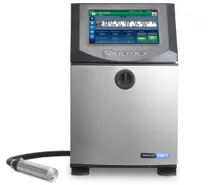
Continuous inkjet (CIJ)
Videojet 1880 +
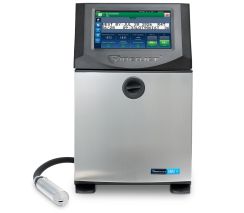
Continuous inkjet (CIJ)
Videojet 1580 +
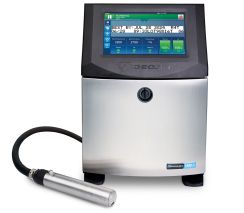
Continuous inkjet (CIJ)
Videojet 1280
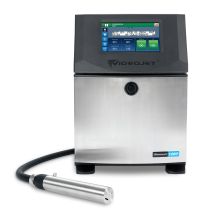
Videojet specialty CIJ printers
Continuous inkjet (CIJ)
Videojet 1880 UHS
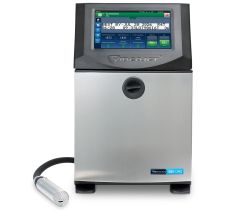
Continuous inkjet (CIJ)
Videojet 1880 HR
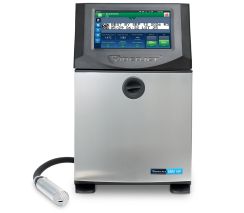
Continuous inkjet (CIJ)
Videojet 1580 C
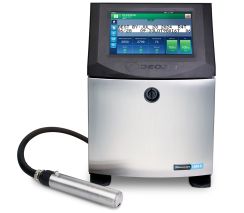
Continuous inkjet (CIJ)
Videojet 1620 FG
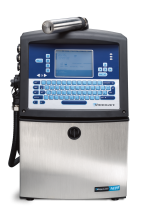
Applications
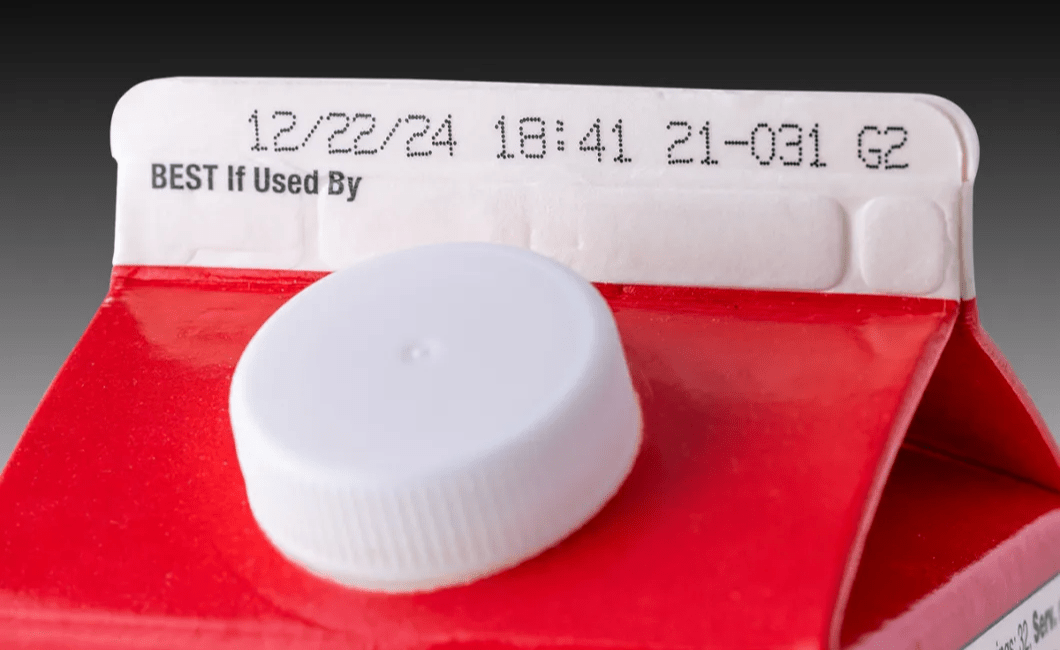
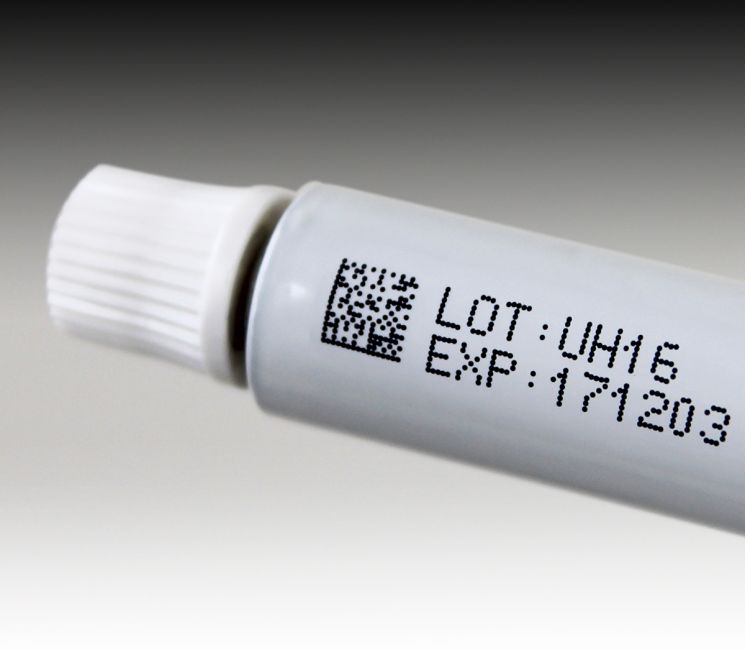
Videojet continuous ink printers are used by manufacturers to mark batch, lot, date, and traceability codes, serial numbers, barcodes, and product information on products and packaging with dye-based, pigmented, UV, and food grade ink options available.

FAQS
A continuous inkjet printer (CIJ) is an industrial coding system that prints information such as batch codes, expiration dates, serial numbers, and barcodes directly onto products and packaging. CIJ printers use a continuous stream of ink droplets to create fast, non-contact markings on production lines.
A continuous inkjet printer generates a constant stream of ink droplets that are electrically charged and precisely directed onto the product surface. This technology allows manufacturers to print high-speed codes and markings on moving production lines without touching the product.
Continuous inkjet printers can print on a wide variety of surfaces including plastic, glass, metal, paperboard, cartons, labels, and flexible packaging. Specialized inks allow CIJ printers to mark both porous and non-porous materials used in industrial manufacturing.
CIJ printers are widely used in industries such as food and beverage, pharmaceuticals, cosmetics, electronics, and consumer goods manufacturing. These systems are commonly used to print traceability codes, date codes, and product identification information.
Continuous inkjet printers provide reliable high-speed coding for modern manufacturing environments. They offer flexible printing on curved or uneven surfaces, minimal downtime, and a wide range of ink options for different materials and applications.
Continuous inkjet printers use liquid ink to print codes and markings on products and packaging, while laser marking systems create permanent marks by altering the material surface with a laser beam. CIJ printers are often preferred for flexible coding applications, while lasers are used when permanent marking is required.
CIJ printers are ideal for packaging coding because they can print small characters and traceability information at high speeds on a variety of materials. Their non-contact printing method allows them to mark products reliably even on fast-moving production lines.


