
Egg coding that protects every shell, carton & customer
Precision egg coding solutions for modern production
Reliable, food-safe marking for eggshells, pulp cartons, foam packs, plastic trays, chub-style packs, and cases — built for dust, humidity, delicate surfaces, and nonstop grading speeds.
From coop to carton to store shelf, Videojet helps producers stay compliant, traceable, and confident. Our egg coders and egg printers are built for barn environments, grading rooms, and high‑speed packing lines — keeping every mark readable, every carton compliant, and every batch retail‑ready through consistent, high‑quality printing on eggs.
Trusted Worldwide
135+
Countries for global reach with local support
400,000+
Printers installed worldwide, including food, beverage, and protein producers
20+ billion
Products coded every day – technology built for high-speed operations
50+ years
Decades of coding leadership in food safety & traceability
Built for egg production
Egg environments push coders harder than almost any other category. Fragile shells, porous pulp, slick foam, dusty barns, cold rooms, and constant SKU changes make consistency and food safety critical. Videojet egg marking systems are engineered to deliver crisp, readable codes from the shell itself to the final carton.
Videojet egg coding systems are engineered for these challenges, delivering crisp, readable marks from the shell itself to the final carton. Our egg coders and egg printers maintain code quality across every substrate and condition — ensuring reliable, food‑safe printing on eggs throughout the entire production flow.
| Your challenge | Our solution | What it means for you |
|---|---|---|
| Coding fragile, curved eggshells | Food-grade CIJ inks for direct shell coding | Clear, safe, compliant marks without cracks or smudges |
| Very high-speed grading lines | High-speed egg coders built for nonstop flow | Keep pace with 24/7 production without bottlenecks |
| Pulp, foam & plastic cartons | High-adhesion ink & laser options | Consistent code quality on every carton type |
| Frequent SKU changes (size, grade, rearing method) | Fast message switching & Code Assurance | Fewer mistakes, smoother operation across daily shifts |
| Dust, humidity & barn environments | Rugged, reliable hardware | Crisp codes that survive moisture, dust & handling |
| EU origin coding & global compliance | Traceability-ready printers | Farm ID, method, country, date — all clearly marked |
| Preparing for GS1 2D codes | 2D-capable CIJ, TIJ & Laser | Future-ready coding for Sunrise 2027 |
| Need for centralized control | CLARiSUITE® integration | Prevents mislabeling and supports multi-plant consistency |
| Operator pressure & long shifts | Intuitive, low-maintenance systems | Easier operation, less daily stress, more uptime |
| Sustainable packaging | Laser & low-VOC ink options | Cleaner coding for recyclable and compostable materials |
What our customers say
Find the right coding technology
Choose the right egg coding solution for your packaging, production speed, and environment.
| Technology | Best for | Key advantages |
|---|---|---|
| Continuous inkjet (CIJ) | Shells, cartons, plastic packs | Food-safe inks, high-speed shell marking, sharp codes |
| Laser marking | Plastic cartons, trays, premium packs | Permanent, clean coding with zero consumables |
| Thermal inkjet (TIJ) | Labels, cartons, paperboard | High-resolution codes with minimal odor |
| Thermal transfer overprinting (TTO) | Flexible films & pouch-style packs | Sharp, clean prints ideal for branding and freshness |
| Large character marking (LCM) | Cases & logistics packaging | Bold, scannable case-level traceability |
Solutions for every egg package
- Eggshells
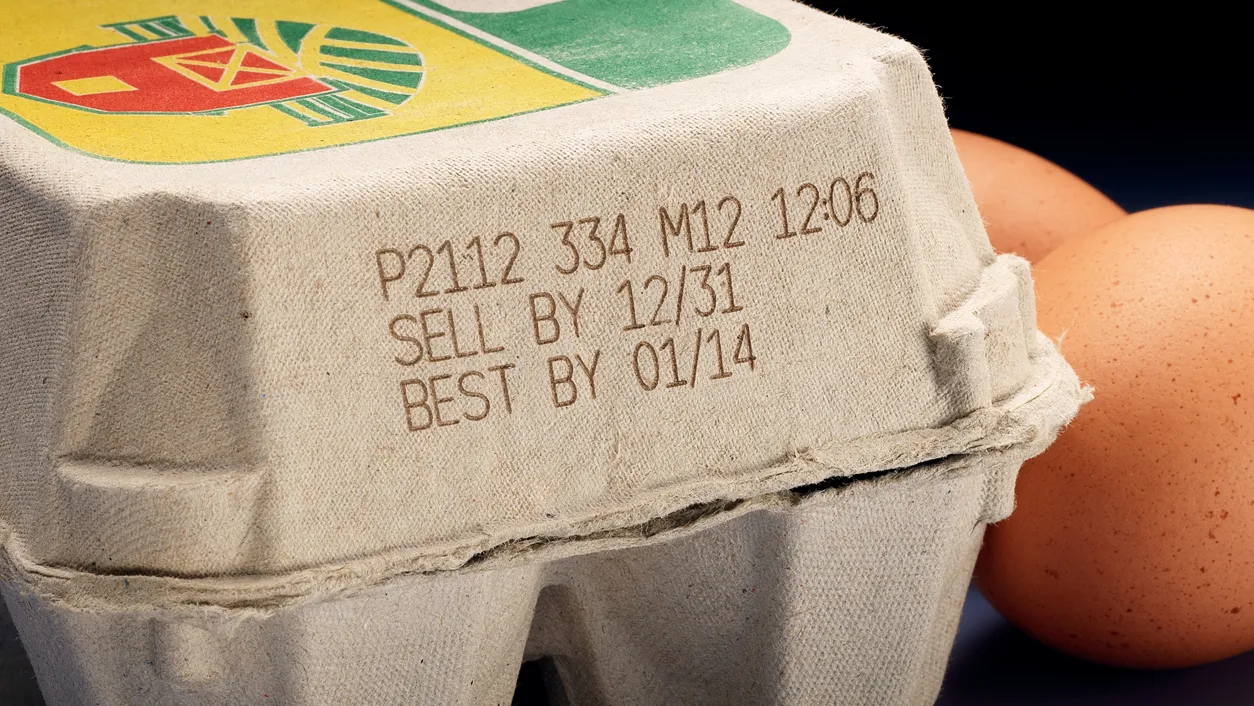
- Pulp cartons
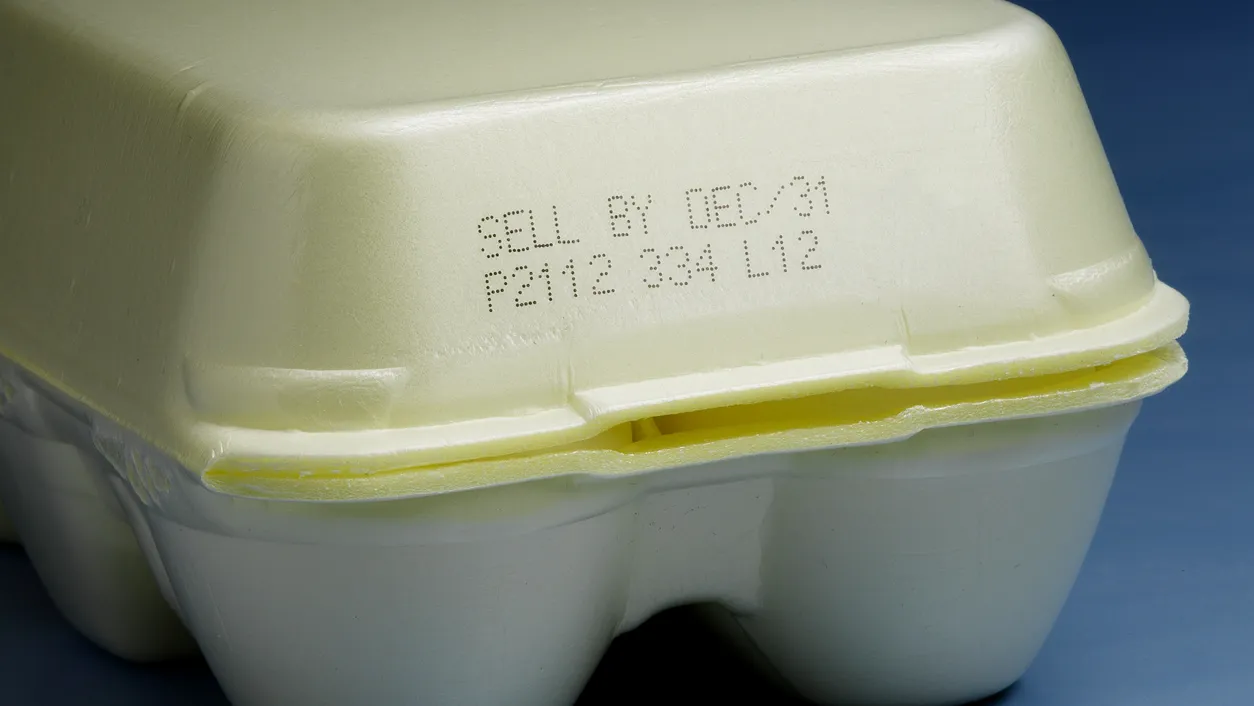
- Foam cartons
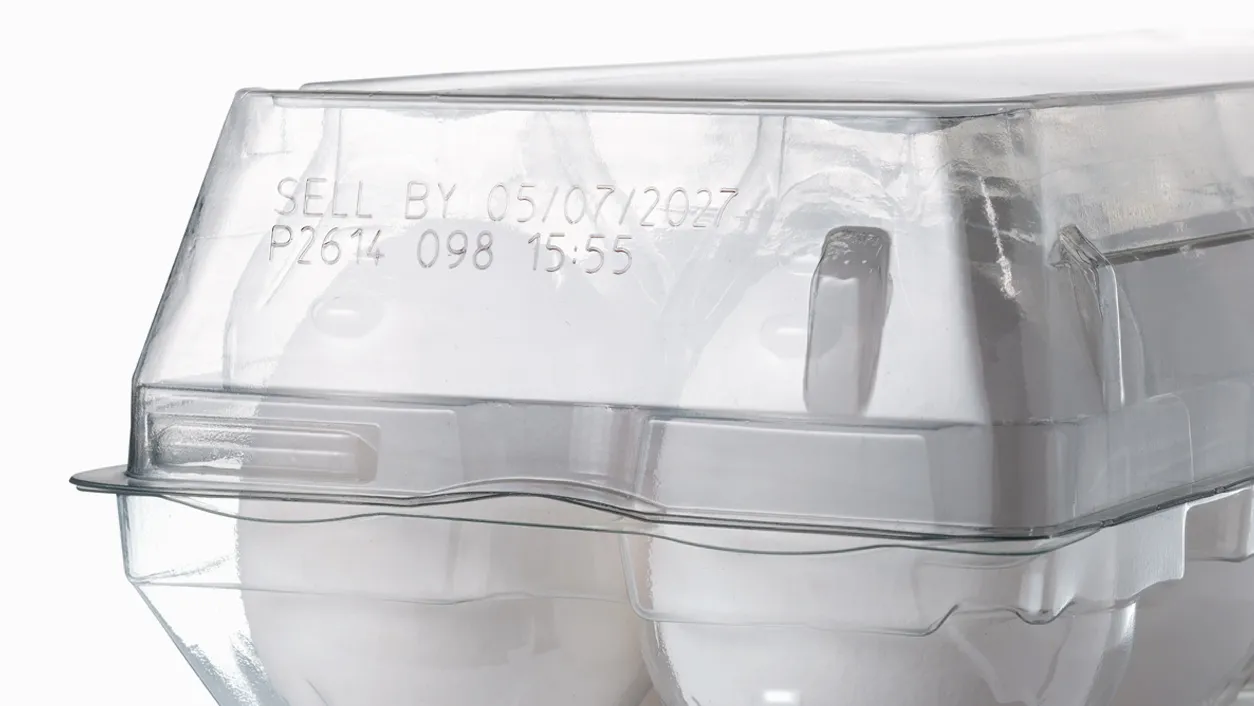
- Plastic
- Chub-style
- Cases
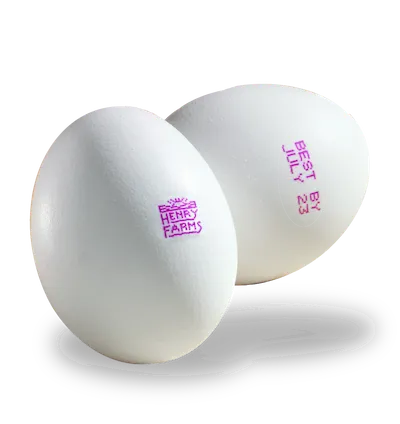
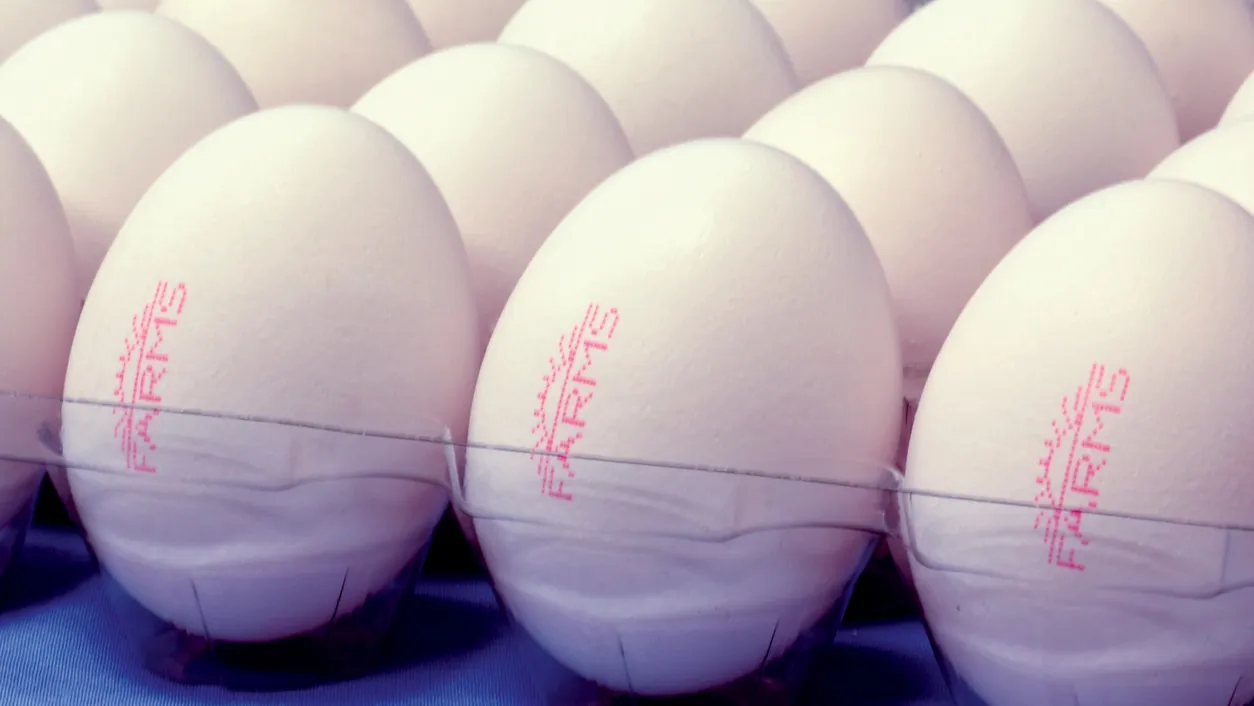
Eggshells (direct coding)
Food-grade ink ensures safe, compliant, readable codes on fragile shells.
Recommended technologies:
Pulp cartons (recycled fiber)
Absorbent surfaces require high-adhesion inks for clarity.
Recommended technologies:
Foam cartons
Smudge-resistant codes that hold up to handling.
Recommended technologies:
Plastic trays & premium cartons
High-definition, elegant coding without damaging surfaces.
Recommended technologies:
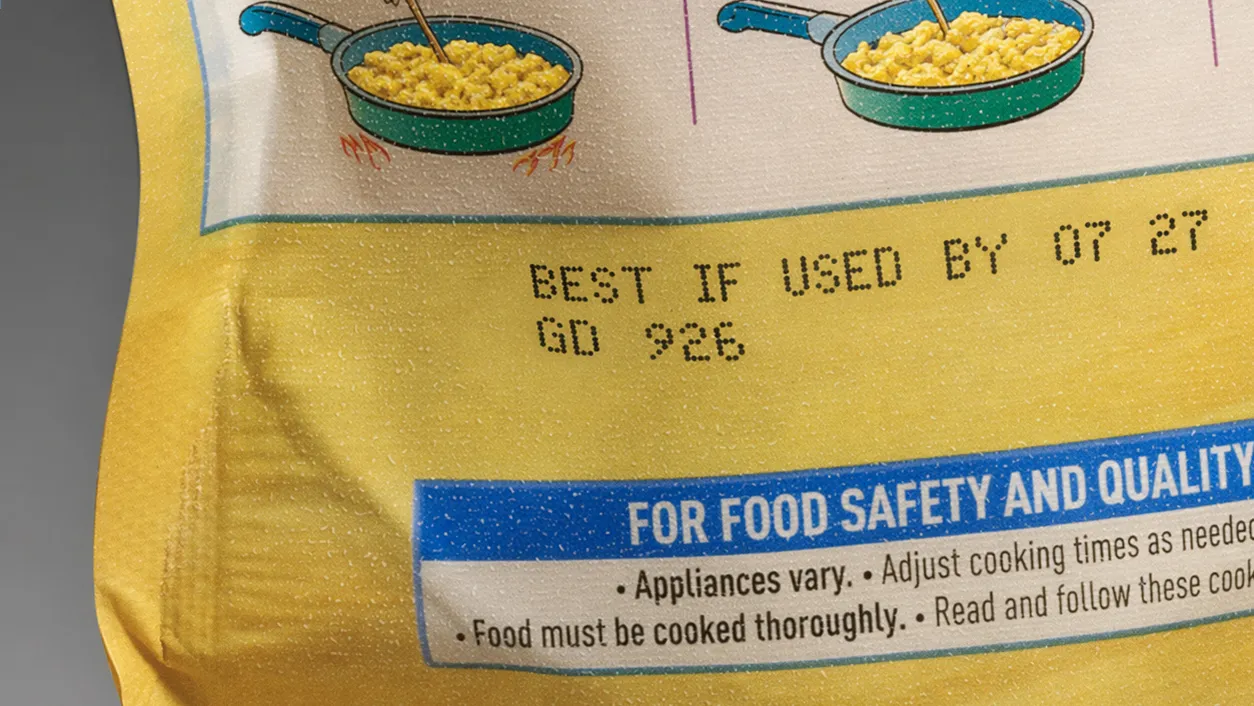
Chub-style pouches or overwraps
Consistent date/batch codes across flexible packaging.
Recommended technologies:
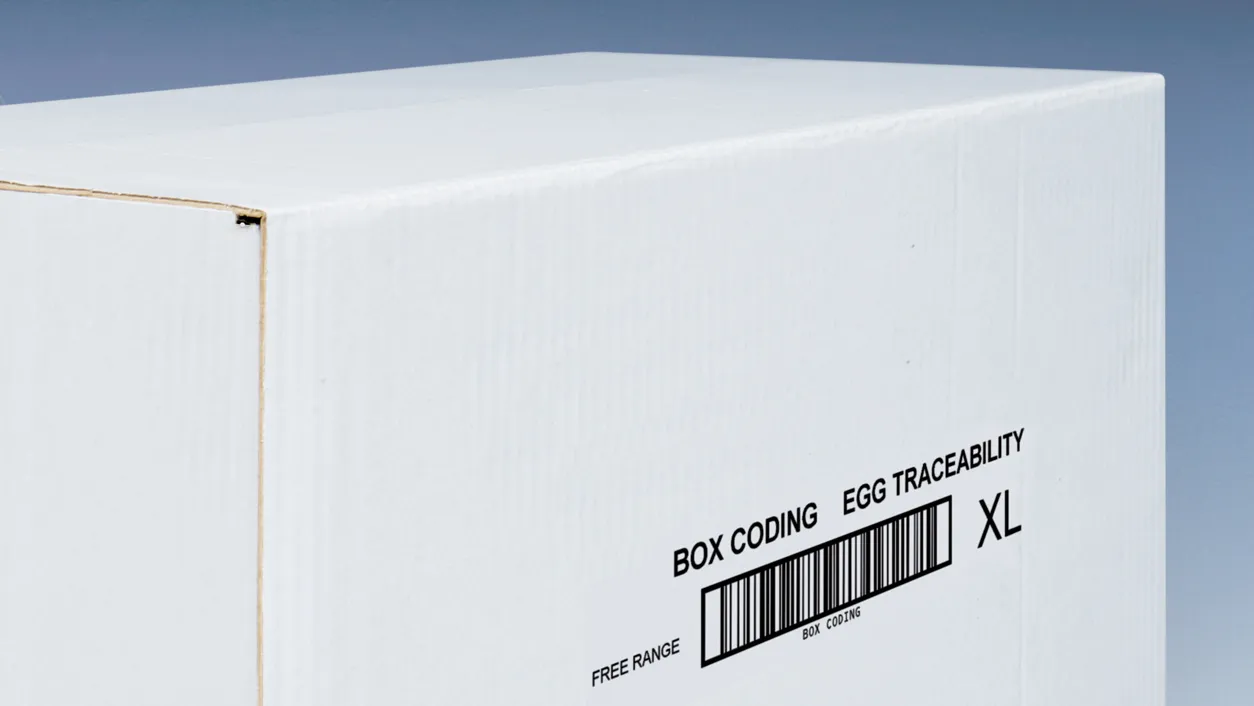
Cases, pallets & secondary packaging
Scannable distribution codes for traceability.
Recommended technologies:
Future-ready solutions for a changing world
As sustainability initiatives and regulatory standards evolve, Videojet helps you stay ahead of the curve. Whether you’re exploring eco-friendly materials or adapting to new compliance requirements, we provide coding solutions designed for:
 Food-safe coding for consumer trust
Inks formulated for direct egg contact, supporting safety and compliance.
 Sustainable packaging
Solutions compatible with recycled pulp, recyclable plastics, and compostable materials.
 Traceability & regulation-ready
Supports EU farm-level coding, GS1 2D codes, and global export requirements.
Keep your line running smoothly
Your line never stops — and neither should your support. Videojet delivers proactive maintenance, remote diagnostics, and operator training to help minimize disruptions and keep production efficient.

Preventive maintenance
Reliability in dusty barns and humid packing rooms.

Remote monitoring & diagnostics
Stay ahead of issues during peak grading and packing.

Easy, operator-friendly interface
Reduces training time and supports consistent quality.
Why egg producers choose Videojet
- Food-safe, readable codes on fragile shells
- Sharp marks on pulp, foam, and plastic cartons
- Fast changeovers for sizes, grades & rearing methods
- Built for dusty barns, humidity, and 24/7 operation
- Supports EU origin rules & GS1 2D traceability
- Durable coding that protects freshness and brand trust
Take the next step
Your eggs carry your promise — freshness, origin, quality. Partner with Videojet to help ensure every shell, carton, and case is coded clearly, safely, and confidently.
Frequently asked questions
Continuous inkjet (CIJ) is widely used for direct shell coding due to its non-contact, food-safe ink application. Laser marking and Thermal inkjet (TIJ) are also used for carton coding, depending on the substrate.
Yes. In many regions, including the EU, eggs must be marked directly on the shell with a code indicating farming method, country of origin, and producer ID.
Typically: recommended consumption date (DCR), rearing method, country of origin, producer code, packing center number, egg size, and category “A” for fresh eggs.
Yes. GS1 2D codes can be printed on cartons and cases to support traceability, inventory management, and retailer requirements.
Pulp absorbs ink, foam can smudge, and plastic may require specialty inks or laser marking for best readability.


