
How to label a box: Inkjet vs. Label Print & Apply

Introduction
When customers say they need to “label a box,” they are often referring to very different things. In secondary packaging, labeling boxes can involve applying a printed label or printing directly onto corrugate with inkjet. Confusing these options is one of the most common reasons companies end up with the wrong box labeling technology.
Each solution for labeling a box performs differently in terms of cost, barcode quality, sustainability, and line efficiency. This guide explains how inkjet and label print-and-apply systems compare, helping you determine the best way to label boxes based on your substrates, production conditions, and compliance requirements.
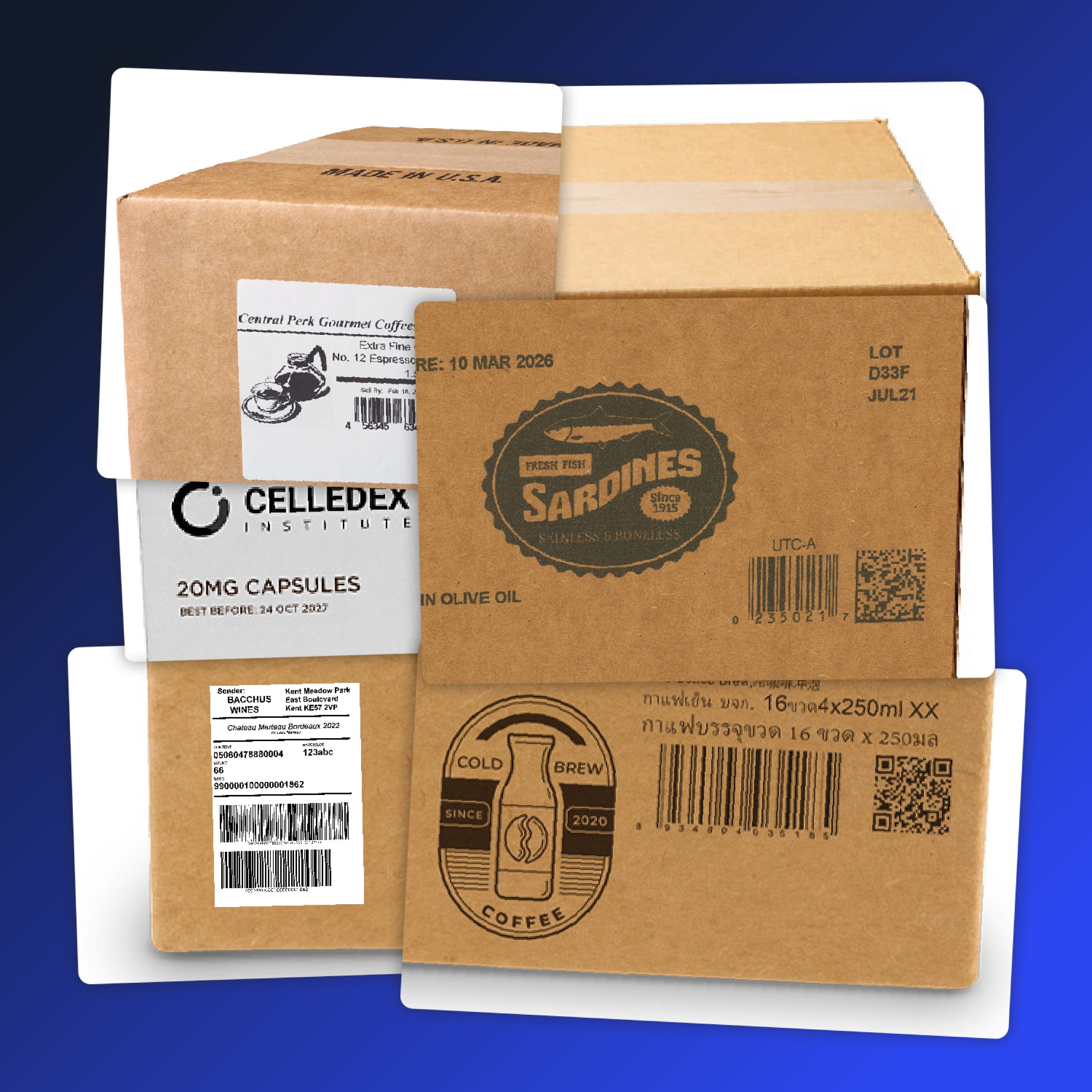
Inkjet: the cost-per-code champion
Large character inkjet (LCM) systems are widely used for labeling boxes because they deliver a very low cost per code. Ink supply options support long print runs, often tens of thousands of cases per changeover, reducing downtime and simplifying consumable management.
LCM systems have a compact footprint and no mechanical applicator arms, making them well suited for labeling boxes on tight-pitch, high-speed lines where cases run close together. On non-recycled, uncoated corrugate, large character inkjet provides excellent contrast and consistent readability for many large alphanumeric codes and 1D barcodes. It is helpful to understand that inkjet performance is closely linked to substrate contrast, so variations in recycled corrugate shade can influence barcode grading while messages remain readable, making substrate selection an important consideration.
Expert Insight: “Inkjet typically wins on cost per code because of consumable efficiency. A single ink bottle run up to 50,000 cases, compared to roughly 2,500 labels per roll on a labeler. That difference is why inkjet often becomes the economic default.”
Key takeaway: Inkjet is ideal whencost per code, speed, and footprint are critical, but it is not the most consistent choice for high‑grade barcodes on variable recycled corrugate.
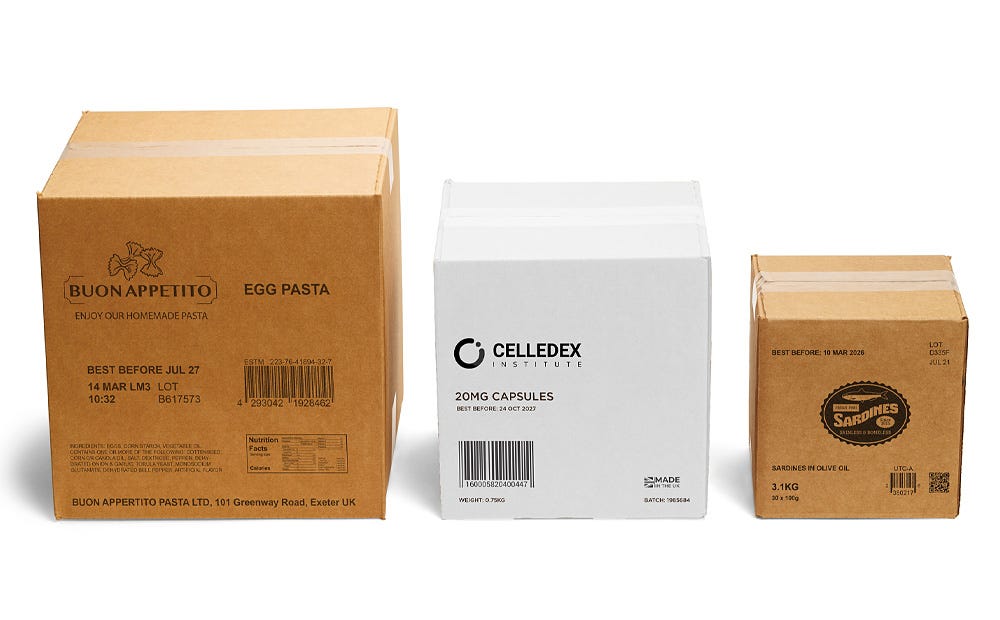
Label Print & Apply: the quality and compliance leader
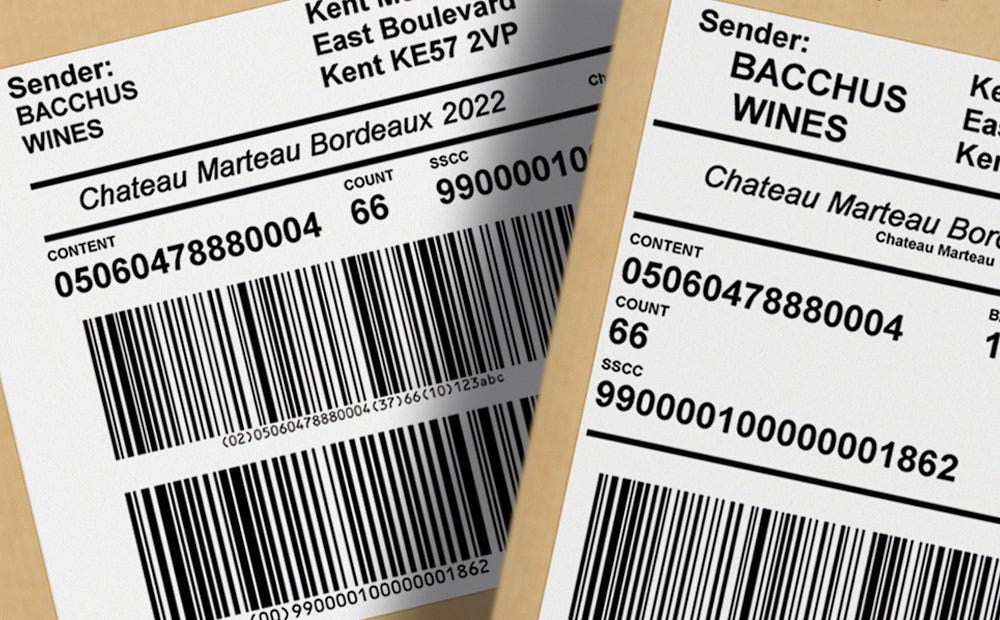
Label print & apply systems print the code on a label and then apply it to the case using a controlled label applicator for boxes. Because printing occurs off-line, barcode quality is not affected by vibration or line speed.
The combination of a white label background and thermal transfer ribbon delivers high contrast and crisp edges, supporting consistent barcode grading while labeling a box. This makes label print & apply a common choice when labeling boxes for retail, pharmaceutical, or logistics compliance.
Labels also reduce sensitivity to substrate variability. Whether corrugate is porous, non-porous, or heavily pre-printed, the label provides a consistent surface for reliable box labeling. Keep in mind that labels and ribbons are ongoing consumables, and the applicator requires space and precise timing, which can impact throughput on tight-pitch lines.
Expert Insight: “Label print & apply removes variability from the equation. You’re printing on a white label with ribbon, so recycled corrugate, surface porosity, or shade differences simply don’t matter. That’s why labels deliver the most consistent barcode grades.”
Key takeaway: A label applicator for boxes is preferred when barcode quality, compliance, and substrate independence outweigh lowest cost per code.
Conclusion
Choosing how to label a box is really about understanding which trade-offs matter most for your operation. By clarifying whether cost or barcode quality comes first—and validating that choice against your substrates, line conditions, and speed—you can select inkjet or label print & apply with confidence for labeling boxes.
Different priorities lead to different answers, and many operations use multiple box labeling technologies across their packaging lines. For a tailored, line-side assessment, a secondary packaging specialist can help evaluate which approach best fits your specific requirements.
Get clarity on your best fit solution
A dedicated secondary packaging specialist can assess your line, identify improvement areas, and recommend the right approach for your operation.
Methodology
Insights in this article are based on real customer conversations and field experience shared by Carl Chaplin, Videojet North America Product Manager for label print‑and‑apply (LPA) and large character marking (LCM) solutions, who has supported complex end‑of‑line installations since 2011. The examples and trade‑offs reflect common secondary packaging applications in food, beverage, pharmaceutical, and logistics environments where labeling boxes is part of daily operations.
Frequently Asked Questions About Labeling Boxes
You can label a box by applying a label with a label print & apply system or by printing directly onto the case using inkjet.
A label applicator for boxes provides the highest consistency and barcode quality, regardless of the surface or corrugate type.
Inkjet is ideal for low cost per code, high volumes, and compact machines, as long as limited positioning flexibility is acceptable.
Inkjet works best at higher speeds and on vibrating lines; label print & apply systems are less sensitive to vibration but require more space.
Choosing technology based on price or features without checking if it truly meets customer or end-customer requirements.
Switching to inline printed solutions significantly reduces stock, errors, and waste.
Always choose technology that meets your customer’s and end-customer’s requirements, not just based on price or features.


